On this sequence, I’ve been exploring the right way to make and modify handles for widespread hand instruments, with a give attention to ergonomics. The motivation is private: I stay with power hand ache from tendonitis and arthritis—problems of hemophilia and years of repetitive work—and small modifications in device design make an enormous distinction. However whether or not you spend just a few hours per week within the store or construct full time, it’s price serious about how your instruments meet your fingers. In the present day’s dialogue is across the ergonomics of various hand aircraft kinds in Western woodworking, specializing in their consolation and power ache.
The earliest hand planes had been merely blades embedded in picket blocks. Their main operate was to slice wooden at a constant depth, in distinction to the extra variable depths produced by different hand instruments comparable to chisels, hatchets, or knives. Many people nonetheless desire the picket physique kinds of planes, regardless that trendy trade has left them behind. These planes are lighter, hotter to the contact, glide extra easily with out oil or wax, and are mechanically easier. Though Stanley launched its first metal-bodied aircraft in 1867, wooden-bodied planes continued to be produced in the USA till roughly 1920. There are some trendy picket aircraft makers on the market (together with Japanese and Euro kinds), however many of the planes of this type you can see are outdated.

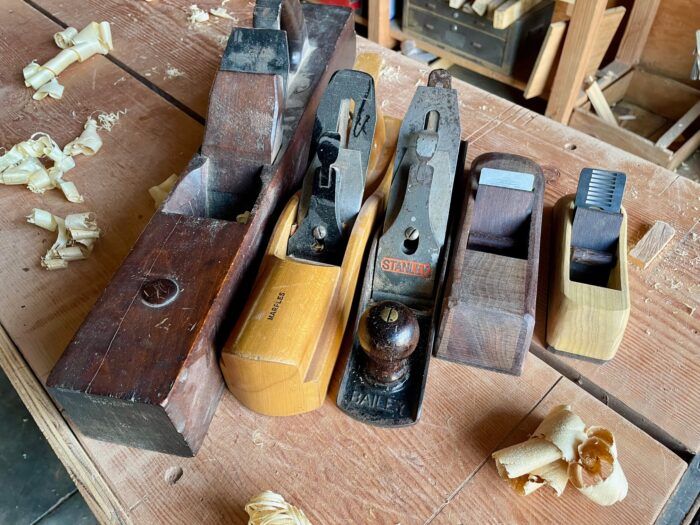
My 22-inch jointer aircraft, for instance, weighs a full pound lower than my Stanley No. 7. Whereas wooden-bodied planes require some observe to regulate, generations of expert woodworkers managed this with nothing greater than a small hammer. The essential grip entails a pistol grip with the suitable hand, whereas the left hand both grips the physique overhand or frivolously rides alongside the highest or left edge. Ergonomically, the commonest criticism is the massive, blocky form. Over time, nevertheless, I’ve discovered to reduce thumb engagement—my most painful joint—by permitting the load of my left arm to interact the entrance. Regardless of its cumbersome look, I commonly use this aircraft for high quality work in my lutherie store, together with jointing items for invisible glue joints. Consumer tip: picket planes work greatest with some velocity to the stroke. Benefit from the sunshine weight and provides it some ahead movement, you is likely to be stunned how simply they lower this fashion.

The subsequent type to contemplate is the so-called “transitional” aircraft, produced by Stanley and others into the mid-twentieth century. These planes mix a picket physique with a metallic frog, blade, and adjustment mechanism. The proper-hand grip stays a pistol grip, whereas the left hand both grasps a knob (if it has one) or lays on high. Though some discover the knob extra snug than greedy the total physique of a conventional picket aircraft, I discover it extra painful as a result of it forces my hand right into a smaller, compressed form. I personal a British instance made by Marples, generally known as a “technical” jack aircraft. It might be a day by day consumer had been it not for a vital flaw: when holding the pistol grip, my proper hand can’t attain the adjustment mechanism. This eliminates the one-handed adjustability that may be a key benefit of contemporary planes. If I have to cease and use each fingers to regulate the aircraft, I might quite use a conventional picket aircraft and a hammer. That mentioned, it excels in weight, at 2.1 kilos in comparison with the 4.4-pound Stanley No. 5.

Probably the most acquainted design is the metal-bodied Stanley aircraft, which dominated woodworking for greater than a century. The grip is much like these of transitional planes, however its higher weight and the necessity to lubricate the only real are notable drawbacks. As with transitional planes, I keep away from greedy the entrance knob and as a substitute maintain the physique alongside the left aspect. Consumer tip: lubricating the only real of a metallic aircraft makes a considerable distinction in ease of use. I take advantage of a rag rolled right into a can with oil on it, others use an oil-soaked rag in a bag. Both means, maintain it on the bench and apply typically. Don’t be anxious about getting oil on the work, it’s such a small quantity that it has no impact.


Throughout all three of those kinds, the suitable hand depends on the identical pistol grip. The Krenov-style aircraft is the primary to basically tackle this limitation by providing a extra relaxed and ergonomic hand place. I initially dismissed this design as fussy and pretentious after studying James Krenov’s writing, significantly his comparisons between a woodworker and a musician with their instrument. As a musician and luthier, I ought to have been extra receptive! This video, by which Krenov describes his planes as easy and unpretentious—particularly his critique of the pistol grip—in the end satisfied me. https://www.youtube.com/watch?v=TsZzznyK7MA

I made a decision to construct a small Krenov-style aircraft roughly equal to a smoothing aircraft, however with a barely cambered iron and an open mouth. Functionally, it behaves like a small jack aircraft able to many duties. I adopted plans from a Fantastic Woodworking article by David Finck. The rear of the aircraft is formed to match my proper hand and left deliberately tough to enhance grip. It requires nearly no gripping pressure, because it conforms naturally to my hand. I’ve not but finalized the form for the left hand, however this is likely one of the strengths of the design: it may be frequently refined by means of shaping. Whereas the only real and sides are easy, all different surfaces stay tough from the bandsaw, rasp, or spokeshave. I used walnut and wenge, completed with a lightweight software of oil and wax. I finally bought a Hock blade and chip breaker, which have confirmed wonderful. Having fun with the method, I additionally made a smaller aircraft to carry a toothed blade, which is especially efficient for extremely figured woods in lutherie and for roughing surfaces normally store work. Consumer tip: look by means of the outdated, cast-off aircraft blades you might have and lower one down to suit a aircraft of this type. You don’t have to make use of a hock blade, however they certain are good.

I’ll give one final consumer tip: Hold your blade sharp! A uninteresting blade dramatically will increase the pressure required to push a aircraft, exacerbating stress and ache. Sharpening doesn’t must be excessive tech and fussy, simply get a contemporary edge on it and get again to work. For day by day work, I’ve not settled on a single aircraft type. My store comprises a combination of vintage picket planes, widespread Stanleys, trendy Lie-Nielsen planes, and selfmade Krenov-style planes. As a result of my store is bigger than that of most solo makers, with distinct stations for various duties, I can distribute instruments the place they’re most helpful. If I had been to downsize to a single device chest, nevertheless, I might be compelled to make tougher selections. I hope this text can provide some perception on my journey, as I attempt to maintain working regardless of power ache. Decide a method and take a look at it out, your physique will let you know if you discover the suitable one.


Fantastic Woodworking Beneficial Merchandise
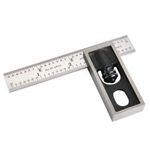
Starrett 4″ Double Sq.
Head is simple to take away, substitute, and lock down; narrowest blade, at 5⁄8 in., made it simpler to suit into tight locations; arduous to learn beneath brilliant lights.
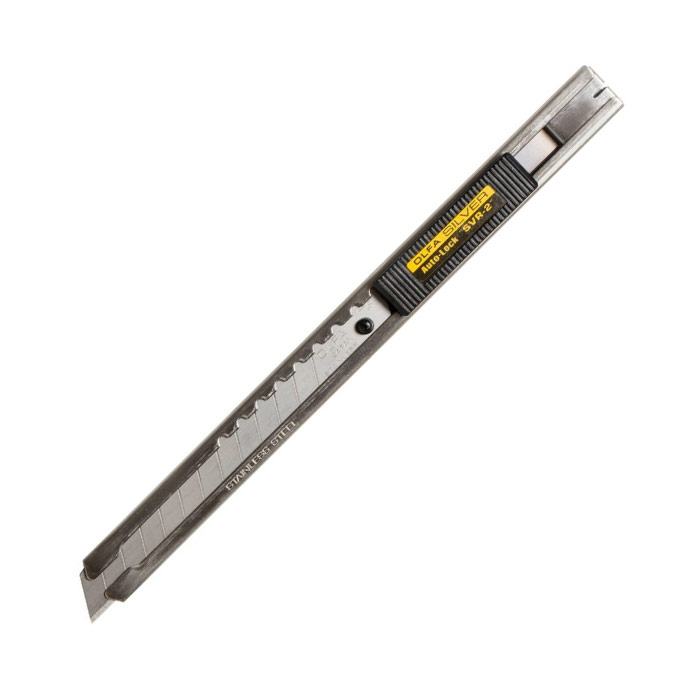
Olfa Knife
Comfy metallic deal with with a break off blade. A device for breaking off the blade is constructed into the useful pocket clip.
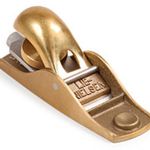
Lie-Nielsen No. 102 Low Angle Block Aircraft
With easy, exact changes and fantastic stability, this compact block aircraft is a pleasure to make use of. It doesn’t have any bells and whistles, however there’s not a greater block aircraft out there for the cash.
Join eletters right now and get the most recent methods and how-to from Fantastic Woodworking, plus particular provides.