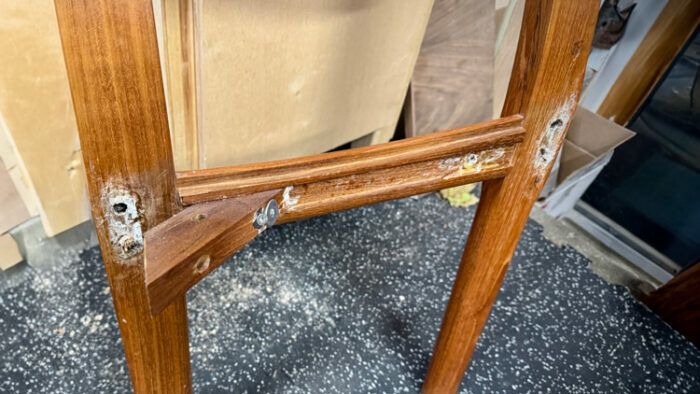
After I first began woodworking, I hated being requested to restore damaged furnishings. It felt like a nuisance. Somebody would present up with a wobbly chair or a break up desk leg and I’d politely decline, saying I used to be too busy or that I didn’t actually “do repairs.” The reality was, I didn’t know sufficient about furnishings development to really feel assured tackling them. On the time, my head was stuffed with shiny new concepts and recent builds. Restore work felt like drudgery, one thing for another person to do.
Over time, although, that perspective has utterly modified. Lately, I truly take pleasure in repairing furnishings. In actual fact, I discover it fascinating. Each restore tells a narrative. When one thing breaks, it’s like a puzzle ready to be solved. Why did this joint fail? Was it a weak glue bond, poor grain orientation, or possibly seasonal wooden motion that wasn’t accounted for? As soon as I determine that out, I get to design an answer that not solely fixes the issue however usually makes the piece stronger than it was when it left the store many years in the past.
Repairs have change into a form of detective work for me. You begin by finding out the clues—the best way the joint break up, the damage patterns, the kind of glue used, or the best way the end has aged. Lots of older furnishings, particularly the handmade stuff, exhibits a deep understanding of the fabric. When it breaks, it’s hardly ever as a result of the maker didn’t know what they have been doing. Extra usually, it’s as a result of wooden is wooden. It strikes, expands, contracts, and typically simply provides up after a century of use.
Then there’s the opposite finish of the spectrum: mass-produced furnishings. We’ve all seen it. Particleboard wrapped in veneer, or joints held along with cam locks and plastic dowels. I don’t contact that stuff. It’s not definitely worth the effort. You may spend hours making an attempt to repair one thing that was by no means designed to final quite a lot of years. When a well-made piece breaks, it’s price repairing. When a cheaply made piece breaks, it’s often time to let it go.
What I’ve come to understand is that good repairs are each bit as inventive as constructing from scratch. In some circumstances, much more so. It’s important to work throughout the limits of the unique piece, respecting the maker’s intent whereas discovering methods to enhance weak spots. Generally meaning introducing new joinery or utilizing fashionable adhesives. Generally it means matching an previous end or fabricating a lacking half so properly that nobody can inform it’s new. It’s each artwork and craft, restoration and innovation.
I believe the rationale I take pleasure in repairs now could be as a result of I lastly perceive furnishings on a deeper stage. I understand how it’s purported to go collectively, what every joint is doing, and what occurs when it fails. There’s a form of satisfaction that comes from bringing one thing again to life—particularly when you realize it was made with care.
Not all the things deserves saving, however the items that do are a reminder that good craftsmanship lasts. And when it falters, an excellent woodworker can step in and provides it one other chapter and maintain it out of the landfill.
Join eletters at present and get the newest methods and how-to from Superb Woodworking, plus particular gives.